ARIZONA TERMITE EDUCATION

Subterranean Termites in Arizona: How They Damage Homes in Phoenix & the East Valley

Subterranean termites live underground, build mud tubes to reach your home, and cause hidden structural damage from below. They are the most common and destructive termite type in Arizona.

INSTANT ANSWER

Subterranean termites live in soil, build mud tubes, and damage wood from the inside out.

Quick Answer

In Arizona, subterranean termites form underground colonies and travel through moisture-protected mud tubes to reach wood in homes. They commonly enter through cracks, slab transitions, and hidden gaps near foundations, causing damage that can stay concealed for months.

  • Most common locally: desert subterranean termites
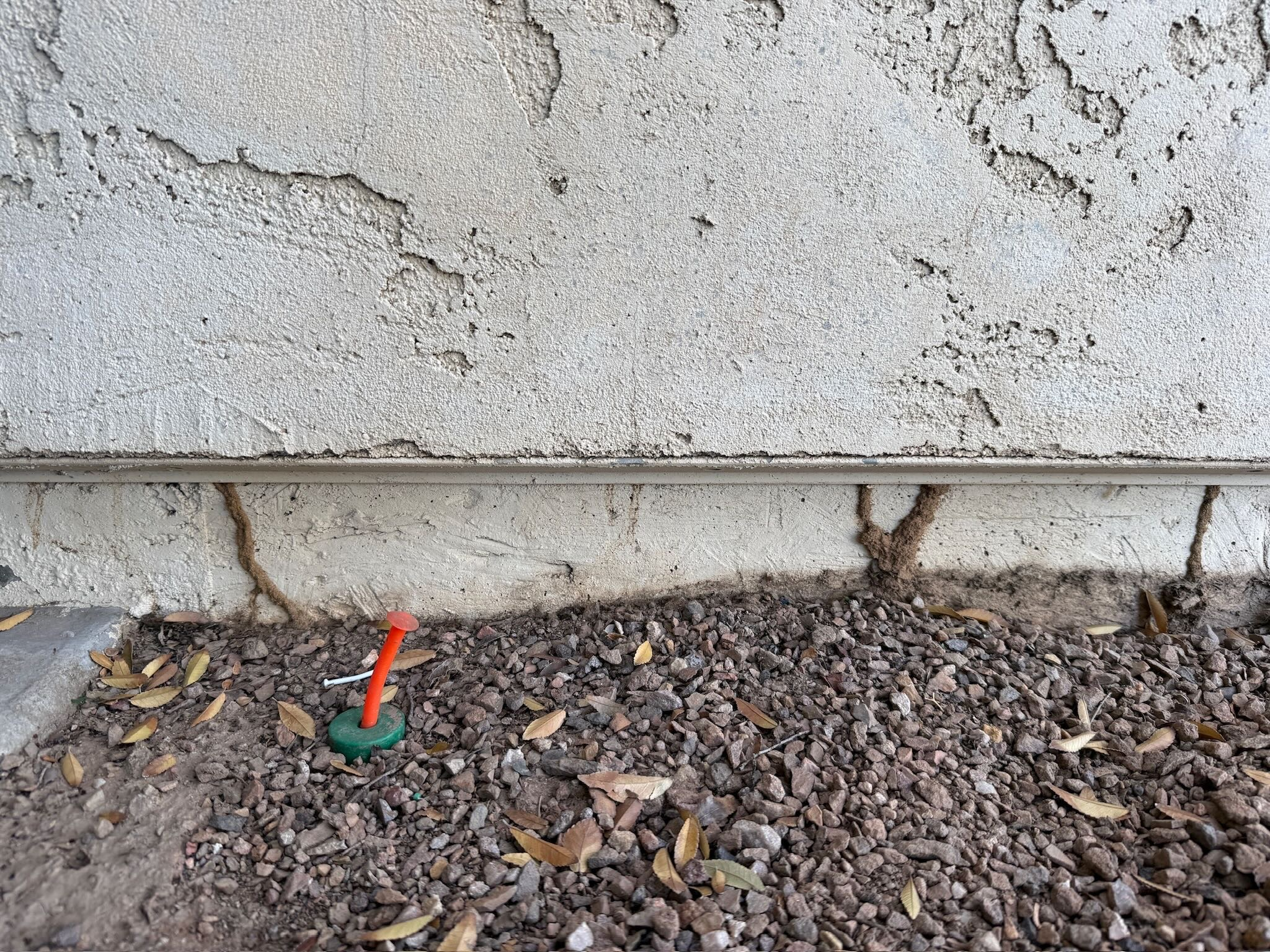
  • Most visible evidence: tubes on stem walls / block walls
  • Biggest risk: hidden structural damage

If you’ve seen tubes or wings, an inspection is the fastest way to confirm activity and map next steps.
LOCAL REALITY

Why Subterranean Termites Thrive in Phoenix Homes

Arizona doesn’t remove termites — it concentrates them around moisture. Irrigation, shaded soil zones, and common foundation designs create the perfect conditions for subterranean colonies to stay active.

Irrigation + Moisture Pockets

Drip lines, overwatering, and planters near foundations can create persistent moist soil zones — exactly what subterranean colonies need.

Slabs + Stem Walls

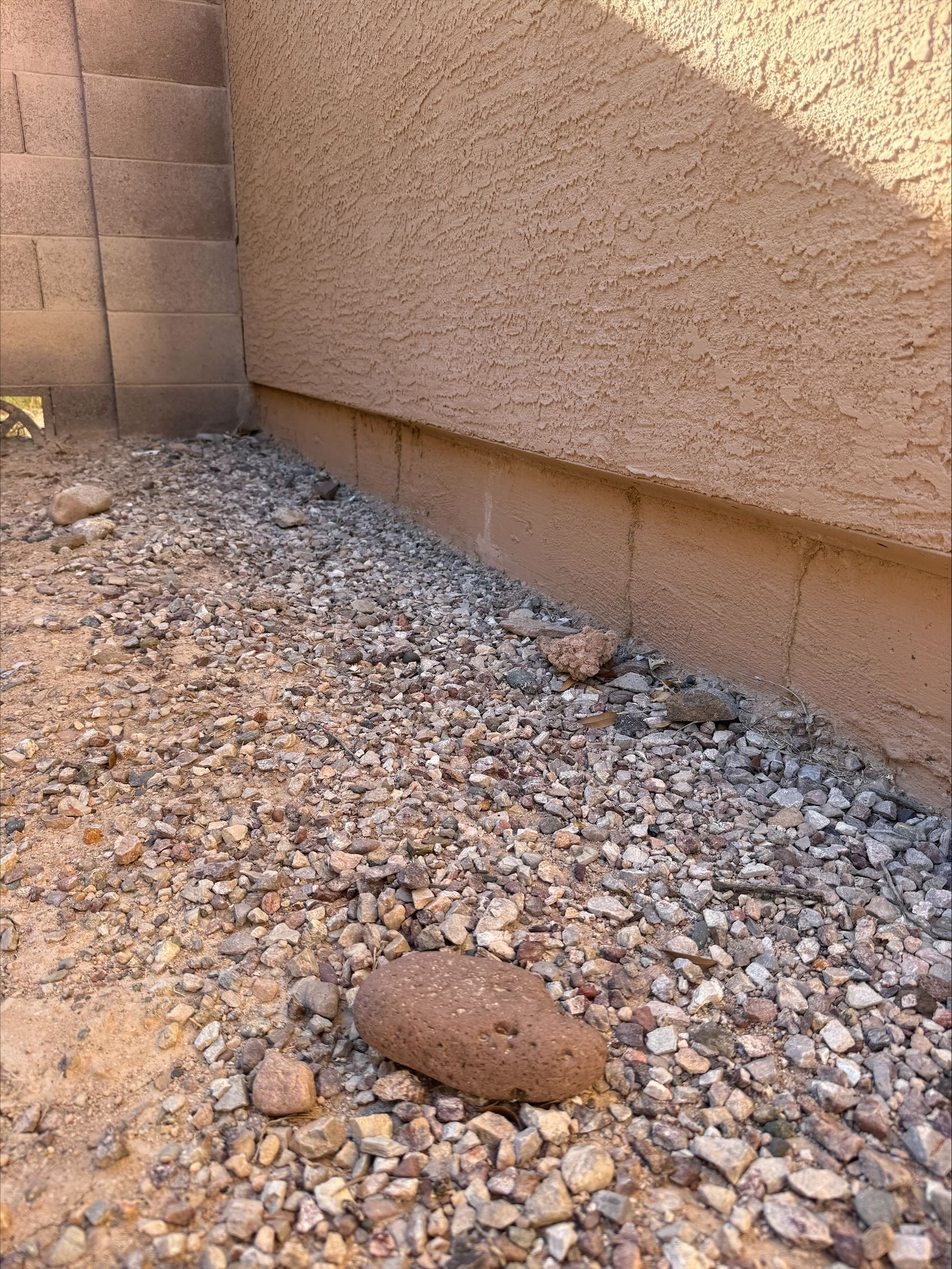
Small cracks, slab transitions, and hidden penetrations become entry points — especially when soil sits against edges.

Desert Landscaping Contact

Soil contact at weep screeds, block walls, and landscape transitions makes it easier for termites to build protected travel paths.

ARIZONA SPECIES

The Two Main Subterranean Termites in Arizona

Key Differences

Feature Desert Subterranean
Heterotermes aureus
Western Subterranean
Reticulitermes hesperus
Primary Region Lower deserts of AZ, CA, and NW Mexico. Coastal areas from BC to Southern CA, and inland to ID and NV.
Moisture Needs Can survive in significantly drier conditions; less dependent on constant moisture. Requires consistent soil moisture to prevent dehydration.
Soldier Appearance Soldiers have slender, straight mandibles. Soldiers have thick, curved mandibles and orange rectangular heads.
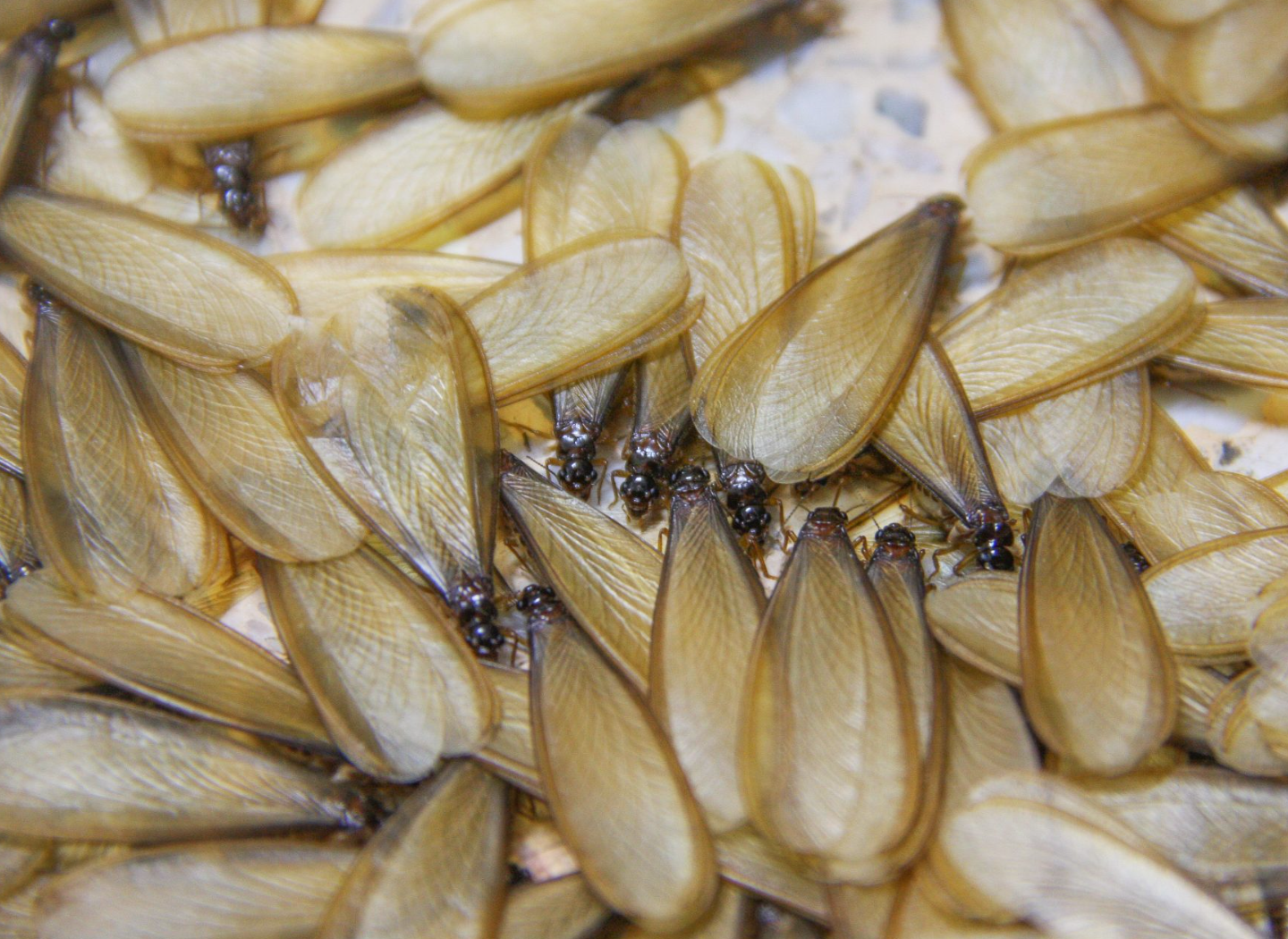
Swarmer Color Pale to light-brown bodies. Dark brown to black bodies.
Swarming Time At dusk or night, typically after summer rains (July–Sept). During the daytime, often after fall or spring rains (Jan–April).
Mud Tubes Often build narrow, circular, free-hanging “drop tubes” from ceilings. Tubes are typically wider, flattened, and built against surfaces for support.
Tap a feature to compare
Desert: H. aureus Western: R. hesperus
Primary Region
Desert — H. aureus

Lower deserts of AZ, CA, and NW Mexico.

Western — R. hesperus

Coastal BC to Southern CA, inland to ID and NV.

Moisture Needs
Desert — H. aureus

Survives in significantly drier conditions; less moisture dependent.

Western — R. hesperus

Needs consistent soil moisture to avoid dehydration.

Soldier Appearance
Desert — H. aureus

Slender, straight mandibles.

Western — R. hesperus

Thick, curved mandibles; orange rectangular heads.

Swarmer Colors
Desert — H. aureus

Pale to light-brown bodies.

Western — R. hesperus

Dark brown to black bodies.

Swarming Time
Desert — H. aureus

Dusk/night after summer rains (July–Sept).

Western — R. hesperus

Daytime after fall or spring rains (Jan–April).

Mud Tubes
Desert — H. aureus

Narrow, circular tubes; may form free-hanging “drop tubes.”

Western — R. hesperus

Wider, flattened tubes built against surfaces for support.

Damage & Detection Insights

  • Access: Desert termites are smaller and can penetrate concrete cracks as narrow as 1/32", making exclusion harder in modern slab foundations.
  • Diet: Both feed on cellulose. Western termites are widely destructive in temperate zones, but Desert subterranean termites are the most destructive species within their Sonoran Desert range.

In Phoenix and the East Valley, Heterotermes aureus is most frequently encountered — but inspection-based identification determines the best treatment strategy for your home.

Research & Sources Tap to view references
Authority sources used for termite biology, identification, and management context:
  1. University of Arizona Cooperative Extension, Arizona Termites of Economic Importance. extension.arizona.edu/publication/arizona-termites-economic-importance
  2. University of Arizona Cooperative Extension, Termite Control for Homeowners. extension.arizona.edu/publication/termite-control-homeowners
  3. University of California Statewide IPM Program, Subterranean and Other Termites (Pest Notes PDF). ipm.ucanr.edu/pdf/pestnotes/pntermites.pdf
  4. University of California Statewide IPM Program, Termite Overview. ipm.ucanr.edu/QT/termitescard.html
  5. U.S. Environmental Protection Agency (EPA), Termites: How to Identify and Control Them. epa.gov/safepestcontrol/termites-how-identify-and-control-them
Note: Species-specific morphology and swarm timing can vary by microclimate and local conditions. Inspection-based identification is the best way to confirm what you’re seeing in your home.

Not Sure Which Species You’re Dealing With?

Desert and Western subterranean termites behave differently. Accurate identification during inspection determines the correct treatment plan.

If You’re Seeing Any of These Signs…

Subterranean termites rarely slow down on their own. The sooner activity is confirmed, the more options you typically have.

THE GOLD PALM STANDARD

The Subterranean Termite Plan That Holds Up in Real Homes

No guessing. We identify the risk, map the access points, and recommend the treatment path that fits your structure and the way termites actually move in Phoenix and the East Valley.

1

Inspection First

Confirm activity, identify species indicators, and document the areas that matter — not just “a quick look.”

2

Targeted Strategy

Liquid, bait, or hybrid based on structure constraints (slab, hardscape, soil access) and risk profile.

3

Continuous Protection

We aim for long-term control with documented placement and a plan built for the conditions around your home.

SIGNS TO WATCH FOR

Signs of Subterranean Termites Homeowners Notice First

If you spot any of these, an inspection helps confirm whether it’s active, where it’s entering, and what treatment path makes sense.

Mud tubes on foundation stem wall

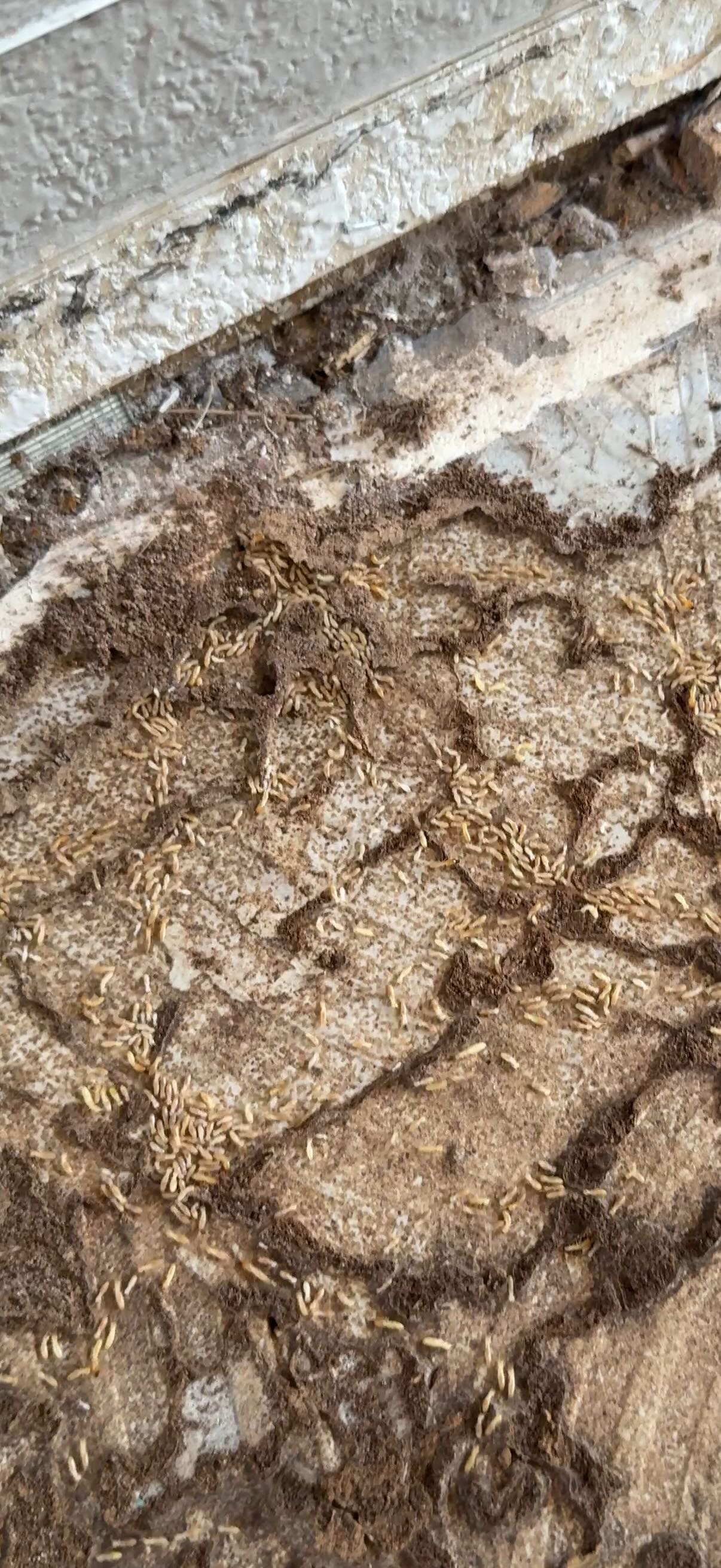
Mud Tubes

Tubes on stem walls, block walls, slab edges, or near soil contact.

Discarded termite wings near window

Discarded Wings

Wing piles near windows, sills, baseboards, or light fixtures.

Hollowed wood from termite feeding

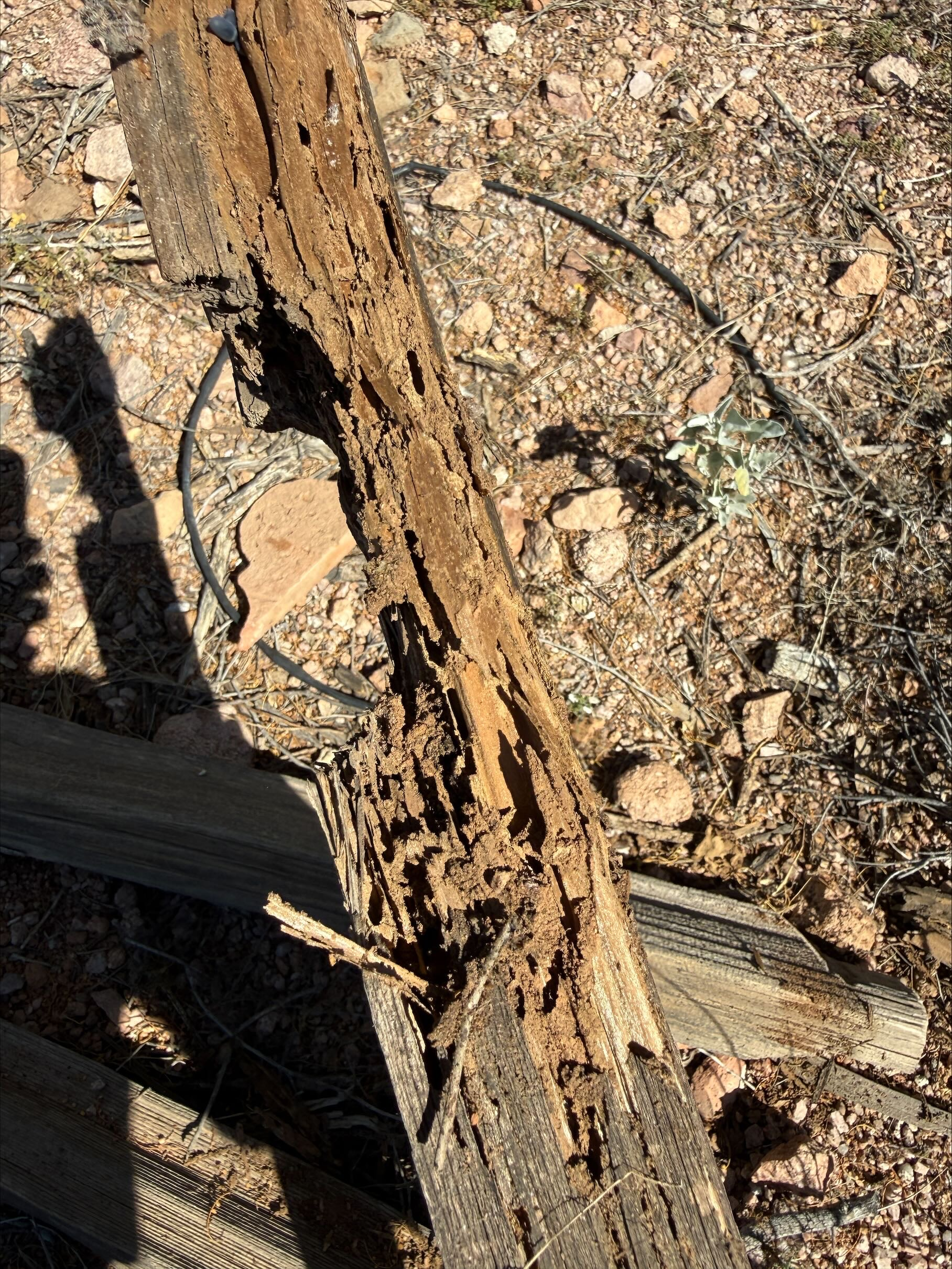
Hollow / Soft Wood

Wood sounds “papery” or hollow; trim may crumble when probed.

Bubbling paint on interior wall

Bubbling Paint / Soft Drywall

Can mimic leaks — inspection clarifies the true cause.

Want the safest next step? See how inspections work or schedule yours here.

WHY PLANS BREAK

Why Subterranean Termite Treatments Fail in Arizona

Failures usually happen as a chain: one missed constraint leads to gaps, which leads to reinvasion. In Phoenix and the East Valley, slabs, hardscape, and irrigation pressure make “generic” plans unreliable.

The Failure Chain (what we see most often)

Each step below is common. One weak link can undo the whole treatment plan.

1

Hardscape Creates Gaps

Patios, walkways, drive edges, and tight side yards interrupt continuous soil access. If it isn’t mapped, coverage becomes partial.

Slab edges Patios Tight sides
2

Entry Points Aren’t Documented

Plumbing penetrations, expansion joints, stem wall transitions, and cracks can become access routes. If you don’t document them, you can’t defend them.

Cracks Plumbing Joints
3

The Strategy Doesn’t Fit the Structure

Some homes need liquid. Some need bait. Many need a hybrid approach when stations aren’t feasible everywhere. The best plan matches constraints — not preferences.

Liquid Bait Hybrid
4

Moisture Pressure Isn’t Addressed

Drip lines, wet planters, shaded soil, and irrigation leaks keep pressure high. Long-term success means handling moisture drivers too.

Irrigation Planters Shade
TREATMENT PATH

Treatment Options That Commonly Work Best for Subterranean Termites

The right option depends on structure, access, and your priority (fast barrier vs long-term monitoring). Inspection makes this decision real — not guesswork.

Liquid Treatment

Often best when active signs exist and perimeter soil access is workable.

  • Barrier / zone protection
  • Strong when coverage is continuous
  • Plan for hardscape + slab transitions

Bait Stations

Often best when long-term monitoring matters most and stations are feasible.

  • Colony suppression over time
  • Ongoing monitoring
  • Placement feasibility matters

Hybrid

Often best when you want barrier strength plus monitoring in mixed-access conditions.

  • Balanced strategy
  • Handles real-world barriers well
  • Customized plan

Want pricing context? See termite treatment cost in Phoenix. If you’re seeing tubes or wings, schedule an inspection so your plan matches your home.

SUBTERRANEAN FAQ

Subterranean Termite Questions Phoenix Homeowners Ask Most

These answers are written for Phoenix + East Valley homes—slab foundations, hardscape constraints, and irrigated landscaping that changes termite pressure.

If you’re seeing signs, the fastest path to certainty is an inspection that confirms activity, maps entry points, and matches the strategy to the structure.

Tip: The best “DIY check” is looking for fresh tubes or wings near windows/lights—then confirming with a pro before you disturb evidence.
Request Inspection How Inspections Work
How do I know if subterranean termites are active right now?

Fresh mud tubes (moist-looking, newly built), swarmers indoors, and tubes that reappear after being lightly disturbed are common signs of active subterranean termites. In Phoenix slab homes, activity often shows along stem walls, cracks, or plumbing penetrations.

Are subterranean termites common in Phoenix and the East Valley?

Yes. Desert subterranean termites are widespread across Phoenix, Mesa, Chandler, Gilbert, Queen Creek, and nearby areas. Warm soil plus irrigated landscaping creates ideal conditions for soil-based colonies.

What’s the difference between subterranean termites and drywood termites?

Subterranean termites live in soil and travel into structures through protected routes (mud tubes), maintaining moisture from the ground. Drywood termites live inside dry wood and don’t need soil contact. The inspection goal is to confirm type, entry behavior, and risk zones so the treatment matches the biology.

Do termite swarmers inside my house mean I have an infestation?

Swarmers indoors can mean a colony is nearby—sometimes inside the structure, sometimes right outside and drawn to lights. What matters is whether there are supporting signs (wings, tubes, wood damage). An inspection determines if it’s a one-time swarm event or active structural activity.

Is liquid treatment designed to eliminate the colony or just stop entry?

Non-repellent liquid termiticides are designed for exposure during normal foraging, which can produce colony-level impact when coverage is continuous and placement is correct. If there are gaps (hardscape, tight access), the strategy must adapt (often with bait or hybrid) to avoid leaving unprotected routes.

Are bait stations better than liquid treatments in Arizona?

Neither is “best” for every home. Liquid creates a treated zone in soil; bait monitors and eliminates colonies over time. In Phoenix, hardscape-heavy homes often benefit from a hybrid plan when stations can’t go everywhere or soil access is limited.

How much does subterranean termite treatment cost in Phoenix?

Pricing depends on the home’s perimeter, foundation type (slab vs stem wall), access constraints (patios, tight side yards), and whether the best plan is liquid, bait, or hybrid. The most accurate estimate comes after an inspection confirms activity, maps entry points, and identifies the structure constraints that drive the treatment approach.

Do I need a termite inspection before selling my home in Arizona?

Many transactions involve termite-related due diligence (especially if there are visible signs like mud tubes or past treatment records). Even when not strictly required, an inspection can help document current conditions, clarify whether activity is present, and reduce uncertainty during negotiations. If you’re in escrow, timing matters—schedule early.

How much does subterranean termite treatment cost in Phoenix?

Pricing depends on the home’s perimeter, foundation type (slab vs stem wall), access constraints (patios, tight side yards), and whether the best plan is liquid, bait, or hybrid. The most accurate estimate comes after an inspection confirms activity, maps entry points, and identifies the structure constraints that drive the treatment approach.

Do I need a termite inspection before selling my home in Arizona?

Many transactions involve termite-related due diligence (especially if there are visible signs like mud tubes or past treatment records). Even when not strictly required, an inspection can help document current conditions, clarify whether activity is present, and reduce uncertainty during negotiations. If you’re in escrow, timing matters—schedule early.

How long does subterranean termite treatment last?

Longevity depends on soil type, moisture, irrigation patterns, and the product/placement. Arizona conditions can be tough on barriers if landscaping or construction disrupts treated zones. That’s why we emphasize documented placement and follow-up monitoring when appropriate.

Can subterranean termites come back after treatment?

Reinvasion is possible if untreated gaps remain or barriers are later disrupted (hardscape work, planters, irrigation changes). The goal is continuous protection matched to structure constraints—and monitoring for the conditions around the home that increase pressure.

What should I do if I find mud tubes or wings before you arrive?

Avoid spraying over evidence or removing everything. If possible, take a clear photo and note where you found it. If you gently break a small section of tube, don’t scrape it all away—inspection is easier when pathways are still visible.

Does moisture around my home increase termite risk in Phoenix?

Yes. Irrigation leaks, wet planters, shaded soil, and consistent drip zones can raise subterranean termite pressure. Moisture management doesn’t replace treatment—but it can materially improve long-term outcomes.

NEXT STEP

If You’re Seeing Signs, Don’t Guess — Confirm It

Subterranean termites can stay hidden while damage grows. A proper inspection helps confirm activity, identify risk zones, and choose the right treatment path for your home.

What we check
Foundation edges, entry points, moisture drivers, visible signs.
What you get
Clear next steps and a treatment plan that fits your structure.
PHOENIX + EAST VALLEY CLEAR TERMS INSPECTION-FIRST

Prefer to read more first? Explore treatment options or see Phoenix pricing factors.

Schedule Your Termite Inspection FAST NEXT STEP
Tell us what you’re seeing — we’ll follow up with clear next steps.
What happens next: We review your details and follow up to confirm the best inspection window.