1
Start outside: pressure + pathways
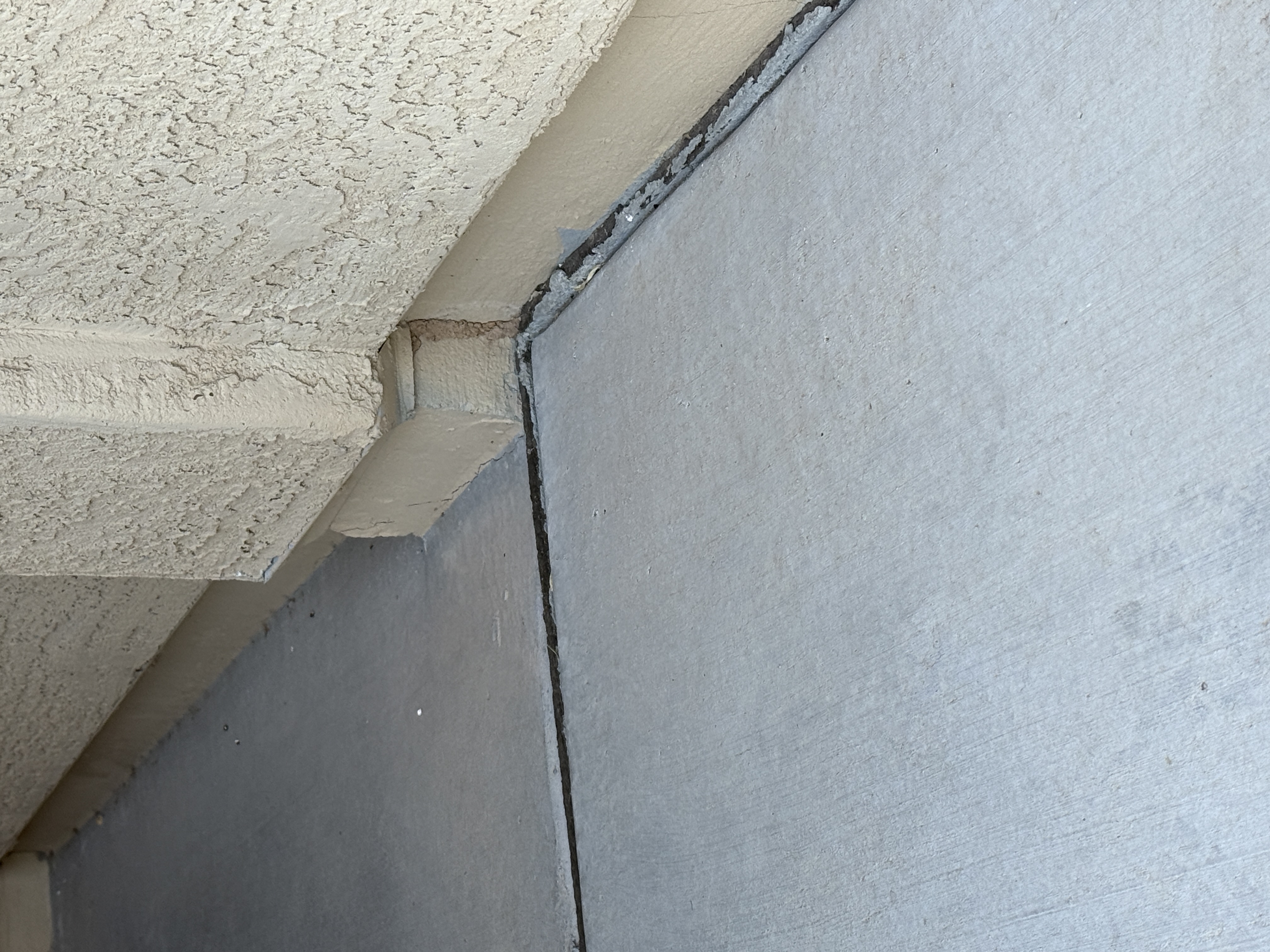
We look for mud tubes, soil contact, moisture, irrigation patterns, and entry points around the foundation, patios, expansion joints, and utility penetrations.

Walk your property with a proven inspection flow built for Arizona homes — irrigation pressure, stem wall transitions, garage slab edges, plumbing penetrations, attics, crawlspaces, and block wall pathways.
Local note: In Arizona, termites do not always show up where homeowners expect. Activity can appear around garage slab seams, interior plumbing walls, expansion gaps, block walls, and irrigated landscape zones before obvious exterior damage is visible.
A proper termite inspection in Arizona checks conditions (moisture/irrigation pressure), pathways (stem wall transitions, slab seams, expansion joints, plumbing penetrations), and evidence (mud tubes, frass/pellets, pinholes, paint bubbling, soft wood) across both the exterior and interior — especially for floating slab (stem wall) and post-tension homes where termites can travel through voids without obvious exterior signs.
Arizona homes are different. We inspect outside + inside because termites can enter through foundation transitions, plumbing voids, and even show up as activity through tile grout when there are slab cracks — sometimes with no obvious exterior tubes.
We look for mud tubes, soil contact, moisture, irrigation patterns, and entry points around the foundation, patios, expansion joints, and utility penetrations.
Garages often reveal slab edges, cold joints, thresholds, water heater stains, and plumbing penetrations — common AZ pathways.
On stem wall (floating slab) homes, termites can move through expansion gaps and plumbing voids. On post-tension slabs, they can still enter via plumbing penetrations — and activity may present as baseboard changes, pinholes near trim, or through cracked grout on tile.
We confirm whether signs align more with subterranean or drywood activity and map the treatment path (liquid barrier, baiting, foam, or hybrid) based on access and risk.
Tap a hotspot to see what it looks like, where to check, and why it matters in Arizona homes.
This isn’t about effort. It’s about knowing where Arizona homes hide termite pathways—especially around moisture zones, slab transitions, and plumbing penetrations.
Most missed activity in Arizona comes from skipping pressure zones and only looking for obvious tubes. If any of the items below match your home, it’s worth getting a professional confirmation.
A quick walk around the house isn’t the same as a structured inspection. Termites win when visibility is limited.
Plant life doesn’t “create termites,” but it can create the moisture + cover that makes activity easier to miss.
Some of the most important clues show up inside — especially near lower walls and wet areas.
Subterranean termites are typically “soil-first.” Drywood termites often show up as pellets (frass) and exit holes. Mixing them up can waste your time.
Mud tubes can look like dirt lines. Frass can look like sand. And moisture patterns near the foundation don’t always mean termites — but sometimes they do.
Tap items as you go. Add quick notes. When you’re done, email the summary to yourself or download it.
This path helps you choose the next best action based on what you found. Tap any step to expand details. Built for Phoenix + East Valley homes.
We don’t build advice from opinions — we align inspection priorities with credible Arizona resources and widely accepted prevention guidance so homeowners can make better decisions.
Quick answers to the questions homeowners ask most in Arizona.
Whether you found mud tubes, pellets, pinholes, or just high moisture near your foundation — we’ll confirm termite type and build the right plan for your home.